

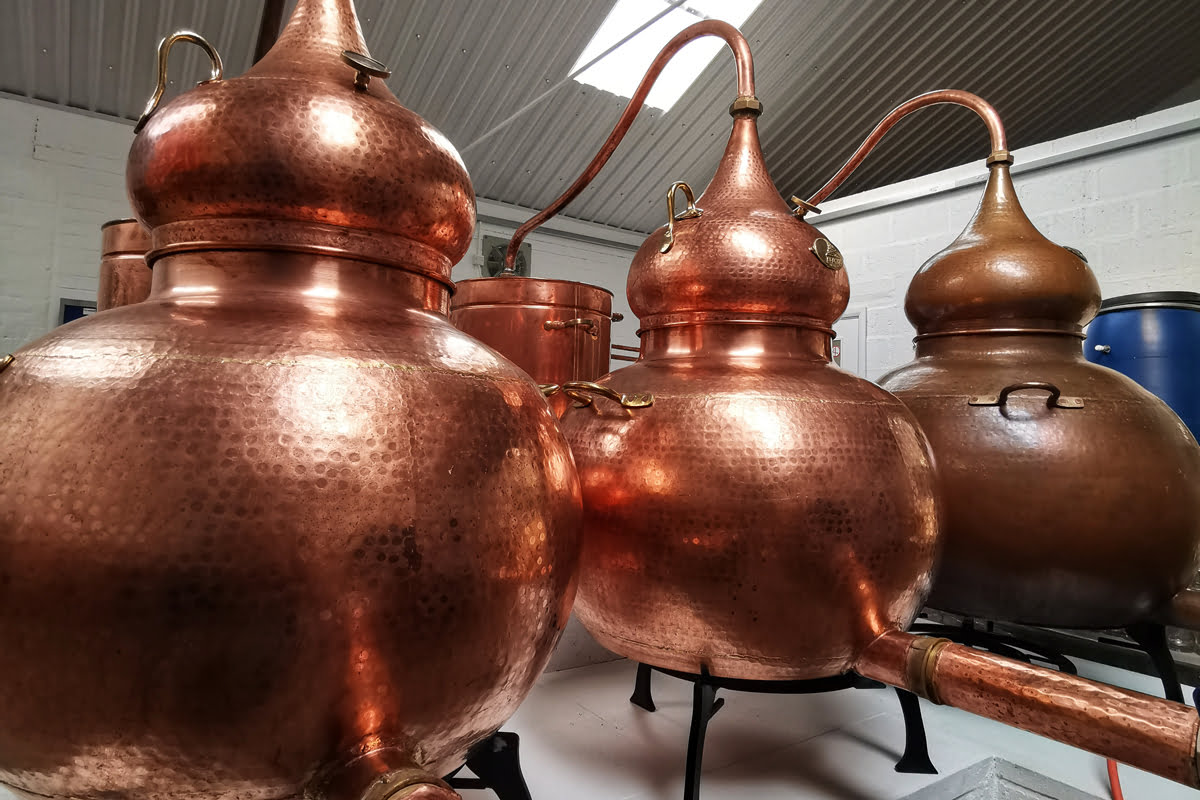
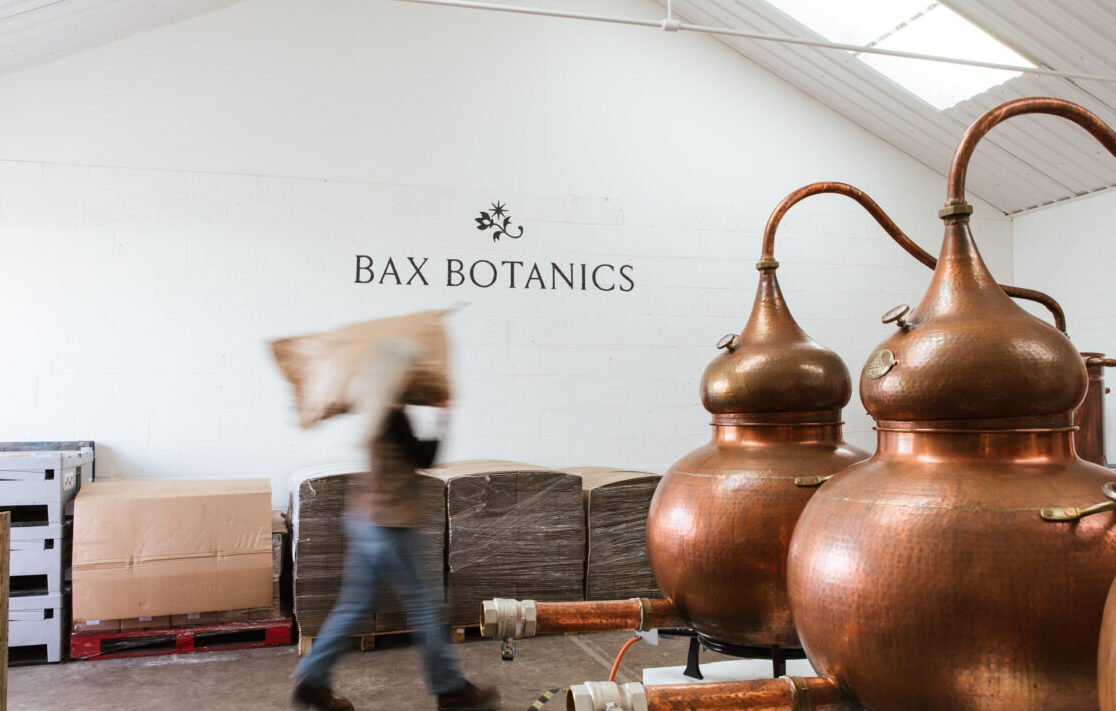
Meet our beautiful artisan-made copper alembic pot stills: Ebenezer, Edith, and Hephzibah.
True craftsmen in Portugal lovingly handmade all three.
We’ve always used this type of still. While far more technologically sophisticated stills exist, these copper pot stills perfectly distill wonderfully pure hydrosols, and we adore them.
Let’s explore the history of the still and the art and science of distillation.
The first known stills date back over 3000 years. Akkadian tablets from c. 1200 BCE provide early evidence of distillation.
These early stills most often extracted hydrosols and essential oils for perfumes and cosmetics, but evidence also shows the distillation of fermented juices for alcohol production.
The term “alembic” comes from the Arabic word “al-anbiq,” meaning “the vessel.” The earliest known written record of the alembic still dates to the 8th or 9th century, when various Arabic alchemists and scholars, such as Jabir ibn Hayyan and Al-Razi, described it in their works.
During the Islamic Golden Age, alchemists and scholars significantly contributed to developing distillation techniques and designing alembic stills. This “golden age” almost certainly saw the creation of the still design we use here at Bax Botanics.
It’s incredible to think we use equipment that has barely changed in over a thousand years!
In the Middle Ages, Europeans adopted the alembic still, where it played a crucial role in developing alchemy and early chemistry. Alchemists and proto-chemists used the alembic still for their experiments, making it indispensable in their quest for the philosopher’s stone and the elixir of life.
I’ve always thought of alchemy as blending science, magic, and art. While we can’t claim to be magicians, a bottle of Bax definitely fuses art and science.
Of course, we follow a recipe, but blindly adhering to it won’t lead to success. Rose crafts each batch of our drinks using art, knowledge, and intuition gained from many years of working with plant flavors. They are truly artisan-made.
We couldn’t do it without our copper pot stills, so let’s raise a glass to Ebenezer, Edith, and Hephzibah!



Leave A Comment